


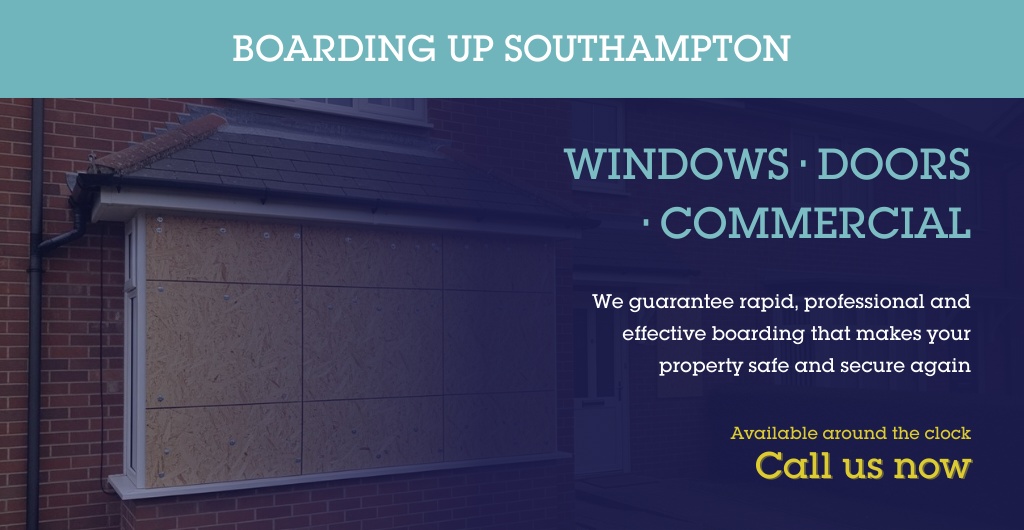
Boarding Up for Vacant Properties in Southampton (SO Postcodes)
An empty house, shop, office, or flat can go from “quiet” to “targeted” very quickly. If a window is cracked, a door won’t latch, or a panel has already been forced, it’s rarely something you can leave until Monday. We provide vacant property boarding up across Southampton and the wider SO postcode area—helping landlords, managing agents, councils, and facilities teams secure property fast and keep it secure while it’s unoccupied.
If you need urgent help (a smashed window, forced entry, or a board up door request), start here: emergency boarding up. For planned security on voids between tenancies, we can book works in and advise on the most practical approach for the building and the length of time it will be vacant.
Need to secure a vacant property now? Call 023 9433 0625 or email us.
When vacant properties need boarding up (typical scenarios)
Vacant buildings fail in predictable ways: minor damage gets worse, opportunistic entry becomes repeat entry, and one unsecured opening can lead to water damage, theft of fixtures, or anti-social behaviour. Common call-outs and planned works in Southampton and across SO postcodes include:
- Post-tenant voids where locks have been changed poorly, keys are missing, or doors are no longer closing properly.
- Break-ins and attempted break-ins to rear doors, side gates, and ground-floor windows (often after dark or out of hours).
- Vandalism such as a board up broken window request after stones or bottles have been thrown at glazing.
- Storm damage where a loose panel, rooflight, or sash window has failed and needs immediate temporary boarding to keep weather out.
- Fire attendance where the fire service has gained access and the property must be secured afterwards (we secure the building; we don’t provide smoke/odour remediation). See fire damage securing.
- Probate and long-term empties where a property will be unoccupied for months and needs a more robust approach than a single sheet of ply.
- Vacant commercial units with vulnerable rear access and large glazed elevations that need a consistent, professional “make safe” standard.
If you’re not sure whether boarding up is appropriate or whether another method is better (for example, a temporary steel door rather than timber), we’ll talk it through on the phone and explain options before attending.
What “vacant property boarding up” actually involves
Vacant property work is different from boarding up an occupied home. The goal isn’t just to cover a hole—it’s to reduce repeat incidents, deter entry, and provide a secure, documented solution that stands up to insurer and stakeholder scrutiny.
Depending on the opening, risk level, and how long the property will be empty, we typically use a combination of:
1) Window boarding (plywood or OSB)
For broken or vulnerable windows, we measure and fit boards to suit the opening and the surrounding frame condition.
- 18mm exterior-grade plywood is commonly used for stronger security and better fix-holding.
- 12mm OSB can be suitable for smaller openings or lower-risk areas where budget and speed matter (we’ll advise).
- Boards are fixed using methods appropriate to the substrate—brick, timber frame, or masonry reveals—aiming for strength and resistance to removal from outside.
If you’re specifically dealing with glazing damage, see window boarding in Southampton.
2) Door boarding and securing forced entries
A forced door is often the weak point that leads to repeat access. If the door leaf or frame is split, swollen, or no longer takes a lock, boarding over the doorway may be the safest immediate option—especially overnight or when the building must be left unattended.
For more robust medium-term security (particularly on voids), we can also discuss temporary door solutions; learn more on door boarding.
3) Shopfront and commercial glazing make-safe
Vacant commercial units can attract attention quickly, and large panes can’t be left. We board shopfronts with appropriately sized panels and fixings designed to resist tampering, while keeping the frontage neat and safe to passers-by.
If you’re securing a retail unit or glazed commercial frontage, see shopfront boarding.
4) Rooflights, skylights, and other overhead openings
Vacant buildings are especially vulnerable to water ingress. A damaged rooflight or skylight can turn into internal damage fast—ceilings collapse, electrics are compromised, and mould develops.
Where safe access is possible and appropriate, we can board over rooflights and other overhead openings as part of a make safe visit. Details are on roof boarding.
5) Anti-tamper fixings and non-destructive methods (where possible)
If a building is likely to be targeted again, the fixing method matters as much as the board. We commonly use anti-tamper fixings to reduce the chance of boards being removed from outside.
Where we can, we aim to avoid unnecessary damage. However, if frames are rotten, fractured, or already compromised, non-destructive methods may not be possible. If that’s the case, we’ll explain what’s achievable before proceeding.
The process: what to expect when you call us about a vacant property
Vacant property security often involves multiple stakeholders (landlord, agent, insurer, facilities manager). Our approach is straightforward and document-led.
-
Initial call / scope
- Tell us what’s happened (break-in, storm, damage discovered during inspection) and whether the building is fully empty.
- If it’s urgent, we’ll prioritise and give a realistic ETA—no fixed arrival promises because conditions and workload vary.
-
On-site assessment
- We check access, identify the compromised openings, and assess the condition of frames, reveals, and surrounding structure.
- We’ll advise whether temporary boarding is sufficient or whether a more robust solution is sensible for a longer void.
-
Make safe / boarding works
- Boards are cut to size, positioned for coverage and strength, and fixed with suitable fixings.
- We aim for a secure finish that deters opportunistic entry and keeps the property weatherproof where possible.
-
Documentation
- You can request time-stamped photos, an itemised invoice, and a clear work statement—helpful for insurers and internal sign-off.
- If the incident is criminal damage or burglary, keep your police reference number to hand.
For urgent attendance, use 24/7 boarding up. For general questions, see our FAQs.
Vacant property risks in Southampton and across SO postcodes (and why speed matters)
When a property is empty, even small issues escalate:
- Repeat entry: once someone has found a way in, they often return. Boarding and proper fixings reduce that risk.
- Weather ingress: a single broken pane can become soaked plaster, damaged flooring, and longer re-let times—particularly if you’re waiting for glazing lead times.
- Theft of fixtures: vacant buildings can attract theft of copper, appliances, and even internal doors and radiators.
- Liability: unsecured sites can create hazards to neighbours and the public. A prompt make safe helps manage that risk.
- Insurance complications: many policies have vacancy conditions. You’re not expected to be an expert on them, but acting quickly and documenting the works usually helps.
If the vacancy follows a specific incident, you may also find these pages useful:
- After a break-in: burglary repairs and securing
- After vandalism: vandalism repair and boarding
- After storm damage: storm damage make safe
We’re fully insured and our technicians are DBS-checked—important when you’re handing over access to empty buildings and working around sensitive sites.
Methods that work best for voids and long-term empty buildings
Not all vacant properties need the same level of security. The “best” approach depends on time vacant, visibility, previous incidents, and building condition.
Short voids (days to a few weeks)
Typical approach:
- Plywood boarding to broken or vulnerable glazing
- Secure door openings if locks/frames are compromised
- Keep it neat, safe, and easy to remove once repairs are ready
This is common when you’re waiting for glazing, a joiner, or a new door set.
Medium voids (weeks to a few months)
Typical approach:
- Stronger boards and more robust fix patterns
- Anti-tamper fixings where risk is higher
- Consider strengthening doors if there’s been forced entry
Longer voids and higher-risk sites
Typical approach:
- A “layered” approach: reduce obvious entry points and make re-entry difficult
- Clear documentation for insurers and compliance
- Where appropriate, discuss longer-term security options (for example, security screens or temporary door solutions)
If you’re managing a portfolio, we can also help you standardise the level of boarding so each site has a consistent security baseline.
Access, keys, and utilities: practical notes for vacant buildings
Vacant property call-outs often fail for simple reasons. If you can, check these before we attend:
- Keys and access: confirm who is meeting on site and which doors are usable.
- Alarms: if an alarm is active, have the code or your alarm company ready—otherwise entry can be delayed.
- Power and lighting: some voids have no power; bring torches if you’re meeting us.
- Hazards: tell us about known issues (loose flooring, prior fire damage, unsafe staircases, needles, or squatters). We can only work safely with good information.
If there are signs of intruders currently inside, don’t enter—call the police first. Once the property is cleared and it’s safe to proceed, we can attend to secure property openings.
Insurance and reporting for vacant property boarding up
We’re not loss adjusters and can’t tell you what your insurer will or won’t cover, but we can provide the documentation insurers typically ask for.
What usually helps:
- Take photos before anything is touched (if safe)
- Keep the crime reference number (if burglary/vandalism)
- Record when the damage was discovered and when it was secured
- Request time-stamped photos and an itemised invoice from us
More guidance is here: insurance claims support. For cost drivers without fixed prices, see pricing.
Areas we cover for vacant property boarding up (SO1–SO53)
We cover Southampton and the surrounding SO postcode districts, including city areas and nearby towns and villages. If you’re managing voids across multiple locations, we can help you keep one consistent contractor for boarding and make-safe works.
You can check local coverage here: areas we cover.
Examples of nearby area pages:
If your property is just outside these, still call—if it’s within the SO postcode area, we can usually help.
FAQs: vacant property boarding up in Southampton
Do you handle empty houses and flats as well as vacant commercial units?
Yes. We regularly board up vacant residential properties (houses, flats, maisonettes) and empty commercial units. The method changes depending on opening size, access, and risk level, but the goal is the same: secure property quickly and professionally.
Can you board up a broken window tonight if the property is empty?
If it’s an urgent smashed window or an insecure opening, contact our emergency boarding up line. We prioritise urgent jobs and will give you a realistic ETA when you call. We don’t promise fixed arrival times because workload and conditions vary.
Is boarding up enough, or do I need something stronger for a long-term void?
Boarding is often the fastest and most practical immediate step, especially after damage. For longer voids or repeat targeting, we may recommend stronger fixings, more robust boarding, or alternative security measures depending on the site. If the frame is too damaged for non-destructive methods, we’ll explain options before proceeding.
What boards do you use for vacant properties?
Commonly 18mm exterior-grade plywood for strength and durability. For smaller openings or lower-risk situations, 12mm OSB can be suitable. We’ll recommend what’s appropriate once we understand the opening and the risk profile.
Will boarding up damage the window frames or brickwork?
We aim to use the least invasive method that still provides security. Sometimes, existing damage (rotted timber, crumbling masonry, split frames) limits the “non-destructive” options. Where additional fixing is necessary for safety and security, we’ll talk you through it.
Can you help with insurance documentation for void property incidents?
We can provide time-stamped photos, an itemised invoice, and a clear description of what was done to make safe and secure the property. That’s often what insurers want. More detail is on insurance claims support.
I’m an agent/landlord—can you coordinate access if I can’t attend?
Often yes, provided access is arranged safely and legally (for example, via a keyholder, lockbox, or agreed collection). Tell us what’s possible when you call so we can plan properly and avoid wasted attendance.
How long does boarding up take on a vacant property?
It depends on the number of openings, access, and the condition of frames and surrounds. A single board up broken window job may be relatively quick, while a vandalised unit with multiple elevations can take longer. We’ll give you a realistic expectation once we know the scope.
Ready to secure a vacant property in Southampton?
Whether you need urgent emergency boarding up after a break-in or planned protection for a void between tenants, we’ll help you make the property safe and secure.
Ready to get started? Call 023 9433 0625 or email us for a free, no-obligation quote.
