

Insurance Claims Support for Boarding Up in Southampton (SO)
If you’ve had a break-in, vandalism, storm damage or an accident and now need the property secured, the insurance side can feel like a second emergency. Our role is simple: we secure the opening, reduce further loss, and give you the clear documentation insurers typically ask for.
We’re Boarding Up Southampton—10+ years trading, fully insured, with DBS-checked technicians working across the SO postcodes. If you need urgent help, go straight to our emergency boarding up page or call us now.
Need help now? Call 023 9433 0625 for immediate assistance.
What insurers usually mean by “make safe” (and how we help)
After damage, most policies expect you to take reasonable steps to prevent further loss—this is often described as “make safe” or “temporary repairs”. In practice, that usually means securing any vulnerable openings so the building can’t be entered easily and weather can’t keep getting in.
For boarding-up jobs in Southampton and the wider SO area, “make safe” commonly includes:
- Board up broken window openings using correctly sized panels and secure fixings
- Board up door openings where locks/frames have failed (sometimes with a temporary steel door for medium-term security)
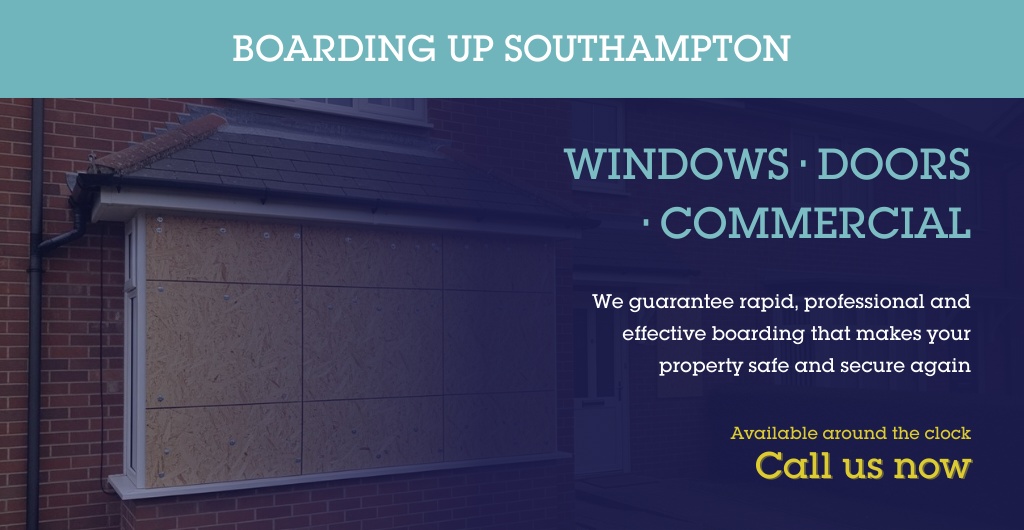
- Shopfront boarded up solutions for commercial glazing where large apertures need stronger bracing
- Temporary protection after roof damage or skylight failure where water ingress is a risk
- Leaving the site stable and clearly documented so your insurer can progress the claim
If you’re not sure what you need, reading what boarding up is and when it’s used can help you understand the options before you speak to anyone.
What we can (and can’t) do for your insurance claim
We aim to make the insurance process easier, but it’s important to be clear about boundaries.
What we do
- Provide emergency boarding up and temporary security across Southampton and SO postcodes
- Take time-stamped photos (before/after where safe) to support your claim file
- Provide an itemised invoice and written work statement describing materials and method
- Use appropriate materials and fixings (for example, 18mm exterior-grade plywood for larger openings; 12mm OSB for smaller, lower-risk apertures when suitable)
- Explain options if the opening is unsafe or the frame is too damaged for non-destructive methods
What we don’t do
- We’re not loss adjusters and we can’t approve or “authorise” claims
- We don’t promise an insurer will reimburse costs (coverage depends on your policy)
- We don’t provide fire clean-up or odour remediation—after a fire we focus on securing the property (see fire damage securing)
If your situation is urgent tonight or out of hours, use the 24/7 emergency boarding up page and we’ll talk you through next steps on the phone.
Step-by-step: how to handle a claim when you need boarding up
When you’re dealing with a smashed window, forced door, or a damaged shopfront, the order of actions matters. Here’s a practical sequence that works well for most customers.
-
Make sure everyone is safe
- If there’s an ongoing threat or someone has forced entry, call the police first.
- If glass is hanging or a structure looks unstable, keep people back.
-
Take quick photos if it’s safe
- Wide shots of the elevation and close-ups of the damage help.
- Don’t put yourself at risk to “get a better angle”.
-
Notify your insurer (or follow their emergency line instructions)
- Some policies specify preferred contractors; others simply require you to mitigate damage.
- Ask what documents they’ll need (invoice, photos, work description, times).
-
Call us to secure the opening
- We’ll ask a few practical questions (size of opening, access, height, whether it’s occupied).
- We prioritise urgent calls and aim to attend as quickly as possible—we’ll give you a realistic ETA on the phone.
-
Keep all paperwork together
- Police crime reference number (if applicable)
- Insurer claim reference number
- Our invoice and work statement
- Photos and any correspondence
For context on what “securing” looks like for common damage types, see burglary repairs and boarding or vandalism repairs and boarding.
The documents insurers typically ask for (and what we provide)
Every insurer is slightly different, but boarding-up costs are generally easier to process when the paperwork is clear and consistent.
We can provide:
- Itemised invoice showing labour, materials, and any specialist fixings
- Work statement describing what we did (for example: “18mm exterior-grade plywood fixed with anti-tamper coach screws to prevent external removal”)
- Time-stamped photos (before and after, where safe)
- Notes on constraints that affected the job (e.g., access limitations, unsafe frames, high-level work)
If you need a general overview of what affects cost (without made-up figures), see boarding up pricing.
Common claim scenarios we see across Southampton and the SO area
Break-ins and forced entry
A typical burglary claim involves a damaged door edge, lock, or frame and sometimes secondary damage to windows. Boarding up is often needed immediately to secure property while the insurer or locksmith arrangements are made.
Related help: post-burglary boarding and repairs and door boarding in Southampton.
Smashed windows and vandalism
A smashed window can’t always wait until morning—especially in winter or if the property will be unattended. We’ll advise on the most secure temporary boarding approach and whether a window can be boarded without creating additional frame damage.
Related help: window boarding in Southampton and vandalism repair support.
Shopfront damage (retail and commercial)
For commercial units, insurers often expect you to secure the frontage quickly to prevent theft and protect stock. A shopfront boarded up solution needs stronger panels and fixings, and sometimes an approach that keeps signage and access in mind.
Related help: shopfront boarding and commercial property boarding up.
Storm and accidental impact
After high winds or impact damage, it’s not just about security—weatherproofing and preventing water ingress can be just as important. If there’s roofline or skylight damage, we can secure vulnerable openings while you arrange longer-term repairs.
Related help: storm damage securing and roof boarding.
If you’re worried about paying upfront
It’s normal to ask: “Do I have to pay first and claim it back?” The honest answer is: it depends on your insurer and your policy.
What we can do is make sure you have what your insurer usually needs to decide quickly:
- Clear description of why the work was necessary (e.g., exposed opening, security risk, weather risk)
- Documentation showing it was temporary boarding / “make safe”, not permanent repair
- Photos and an itemised invoice that’s easy to upload to a claim portal
If you want to talk through your specific situation before booking, call us—we’ll explain what we can provide and what we can’t promise.
How we work (so your insurer gets a clean story)
Because insurance claims can be delayed by vague descriptions, we keep our process consistent:
- We measure openings and choose materials appropriate to risk and span
- We use anti-tamper fixings where external removal is a concern (particularly if the building will be vacant)
- We’ll avoid unnecessary damage where possible (for example, fixing into frames sensibly rather than ripping out trim)
- If the frame is too compromised for a non-destructive approach, we’ll explain options before proceeding
If the property is unoccupied or between tenancies, you may also want to read about vacant property security and boarding.
FAQs: Insurance claims and boarding up in Southampton
Will my insurance cover boarding up in Southampton?
Many policies cover reasonable “make safe” measures after insured events like burglary, vandalism, storm damage, or impact—but cover depends on your policy terms, excess, and claim conditions. We provide documentation to support your claim, but we can’t guarantee reimbursement.
Should I contact my insurer before you board up a broken window?
If it’s safe and you can reach them quickly, yes—especially for commercial sites. But if the opening is a security risk (or weather is getting in), prioritise securing the property. We can board up and provide the paperwork insurers typically ask for.
What do I tell my insurer when a window is smashed and needs boarding?
Explain that you’re arranging emergency boarding up to prevent further loss and to secure property. Note the date/time of the incident, whether police attended, and that the work is temporary protection until permanent repairs.
Can you provide photos and an invoice suitable for a claim?
Yes. We can supply time-stamped photos (where safe) and an itemised invoice with a work description. If your insurer has a specific format request, tell us when you book and we’ll do our best to accommodate it.
Do you deal with insurer “approved contractor” schemes?
Some insurers prefer nominated suppliers. If your insurer requires that, you should follow their process. If they allow you to appoint your own contractor for make-safe work, we can attend and provide supporting documentation.
Is boarding up classed as a repair?
Boarding up is usually treated as a temporary measure—a way to make the property secure and weather-resistant. It’s not a final repair to glazing, frames, or doors. Permanent reinstatement is typically handled separately.
I’m out of hours—can I still start an insurance claim tonight?
You can often start a claim online or via an emergency number. Either way, if you need the site secured out of hours, use our 24 hour emergency boarding up in Southampton page and call us—your insurer can be updated afterwards with our paperwork.
Next steps
If you need to make safe a property after a break-in, smashed window, storm damage or impact, we’ll secure the opening and provide the documentation your insurer is likely to request.
Ready to get started? Call 023 9433 0625 or email us for a free, no-obligation quote.
